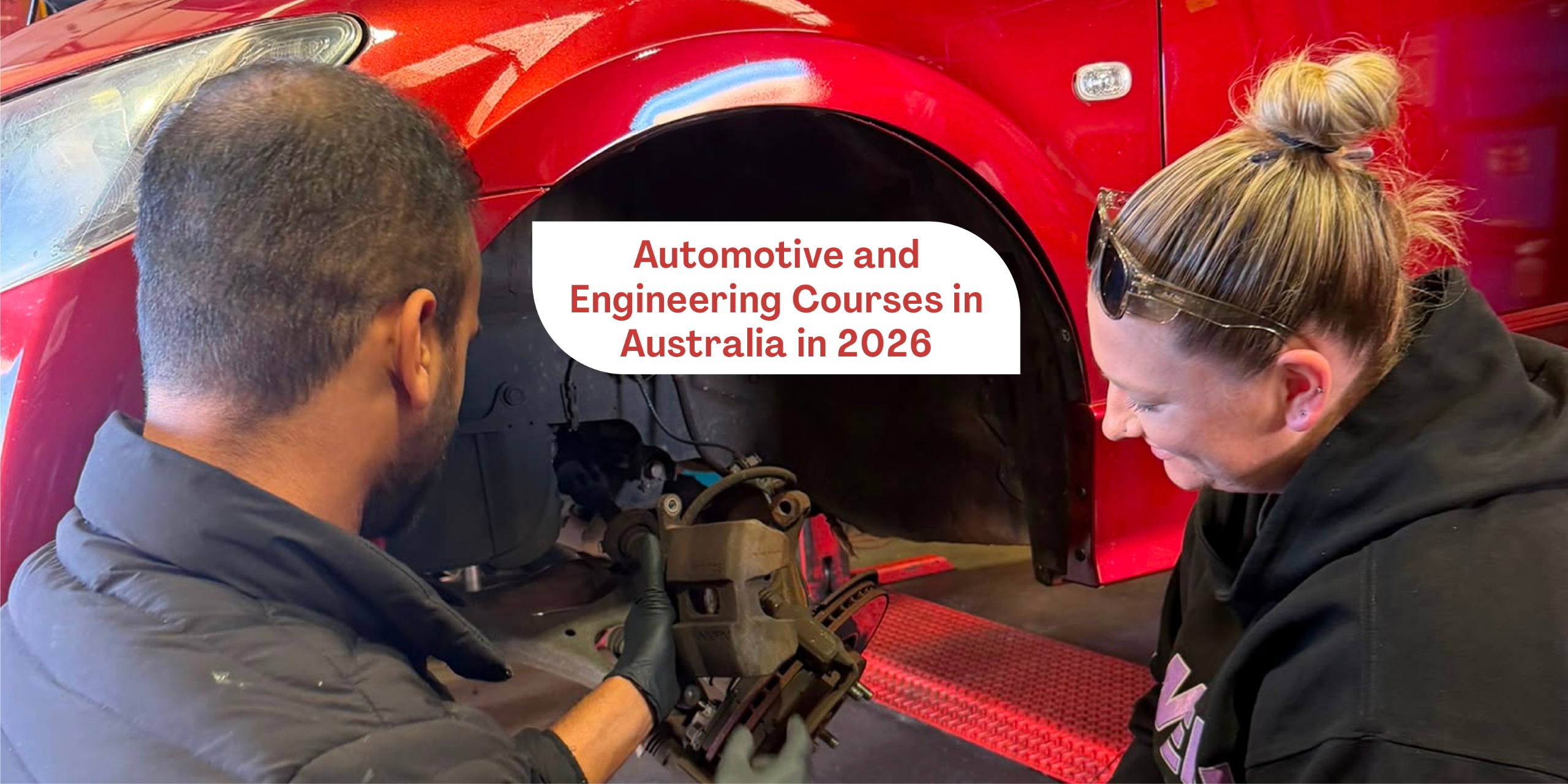
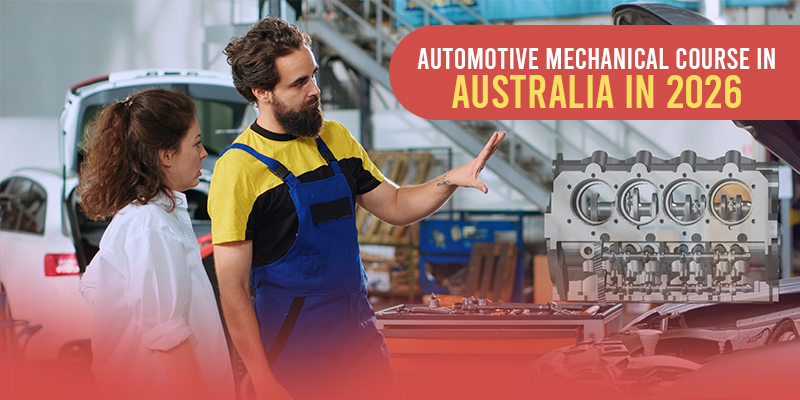
Australia’s roads are getting busier, its vehicles are getting more complex, and the mechanics keeping them running are in shorter supply than ever. If you have ever been the person who actually wants to know what is happening under the bonnet, not just fill up and drive, then an automotive mechanical course might be the most practical decision you can make right now.
This guide walks you through what the course covers, why the timing in 2026 is particularly strong, and what a real career in this trade can look like- no fluff, just what you actually need to know before you enrol.
What Does an Automotive Mechanical Course Actually Cover?
The AUR30620 Certificate III in Light Vehicle Mechanical Technology is the entry qualification for this trade in Australia. It is designed to give students hands-on technical training across real workshop environments, not just classroom theory.
Over the course of your training, you will work across:
- Engine diagnosis, servicing and repair across petrol and diesel systems
- Cooling and fuel delivery systems
The AUR40226 Certificate IV in Automotive Mechanical Diagnosis builds on this foundation with advanced fault-finding techniques, complex systems diagnosis, and preparation for more senior workshop roles.
📎 Source: Australian Industry Standards for Automotive Training: training.gov.au — AUR30620 and AUR40226 qualification pages
Why 2026 Is a Particularly Good Time to Enter This Trade?
The conversation in the automotive industry right now is not about whether electric vehicles (EVs) are coming; they are already here. The real question is who will be qualified to service them. And right now, that pool of trained technicians is very small.
According to the National Centre for Vocational Education Research (NCVER), automotive mechanics consistently appear on Australia’s skills shortage lists, with demand driven by both the ageing of the current workforce and the transition toward hybrid and electric drivetrains.
📎 Source: NCVER — Australian Vocational Education and Training Statistics, ncver.edu.au
📎 Source: Jobs and Skills Australia — Skills Priority List, jobsandskills.gov.au
This matters for students because it means the qualification you earn today has real traction. Workshops across Perth and regional Western Australia are actively hiring, and employers are increasingly willing to bring on graduates and train them further on the job.
Electric Vehicles Are Changing the Trade, and That Is a Good Thing
A common concern from students is whether traditional mechanical training will still be relevant as EVs take over. The answer is yes, and here is why.
EVs still have braking systems, suspension, tyres, cooling systems, and onboard computer networks. Many of these are more sophisticated than their combustion equivalents, not less. The biggest shift is that fault-finding is increasingly done through software diagnostics and sensor interpretation. The technicians who understand both traditional mechanical systems and modern diagnostic tools are the ones workshops will compete to hire over the next decade.
📎 Source: Electric Vehicle Council — State of Electric Vehicles in Australia, electricvehiclecouncil.com.au
What Skills You Walk Away With
Beyond the technical content, a good automotive course trains you to think systematically under pressure, which is exactly what happens in a real workshop when three vehicles are booked in, and one has an unusual fault nobody has seen before.
Career Pathways After Completing the Course
Completing this Certification gives you the foundation to enter the workforce as a qualified light vehicle technician. From there, the pathway branches depending on what interests you most.
Common directions graduates take:
- Light vehicle technician at an independent workshop or dealership
- Fleet maintenance technician for transport and logistics businesses
- Mobile mechanic or sole trader
- Specialised EV or hybrid technician with additional manufacturer training
- Senior diagnostic technician or workshop supervisor with the Certificate IV and experience
Western Australia’s resources and mining sector also employs automotive technicians for plant and vehicle fleets, a pathway with its own pay scale and working conditions.
📎 Source: Australian Government Labour Market Insights — Automotive Electricians and Mechanics, labourmarketinsights.gov.au
Is This Course Right for International Students?
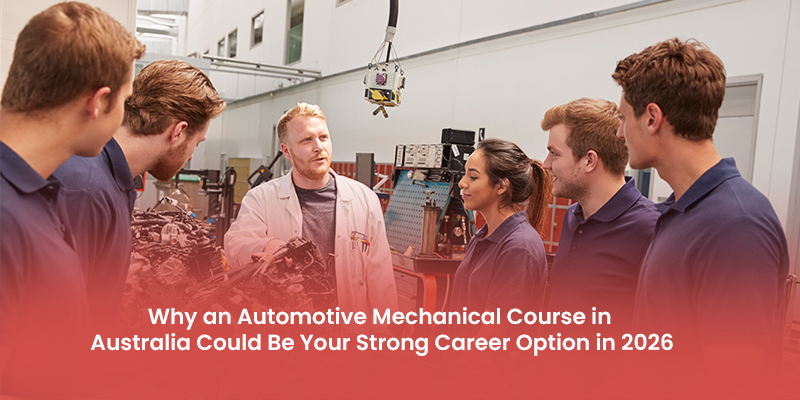
Yes, and for practical reasons. The skills you develop in an automotive mechanical course are transferable globally; mechanical systems and diagnostic software are not unique to Australia. For students looking to build a hands-on qualification in a country with high training standards, this pathway is a strong option.
City College Perth offers the AUR30620 and AUR40226 with training delivered across workshop environments designed for real workplace simulation. Classes are available on Fridays and Saturdays, making it accessible for students managing other study or part-time commitments.
CRICOS registration means the qualification is delivered under Australia’s national standards for international students, with proper oversight and quality assurance built in.
What to Look for in an Automotive Training Provider
Not all workshops are the same, and not all training providers are either. When you are evaluating where to study, the questions that matter most are:
- Does the training happen in a real workshop with actual vehicles — not just simulators or slideshows?
- Are the trainers working industry professionals, not just academics?
- Does the provider have access to modern diagnostic equipment including OBD scanners and EV-compatible tools?
- Is the qualification nationally recognised on the Australian Qualifications Framework (AQF)?
- What does the timetable actually look like — will it work around your existing commitments?
These questions give you far more useful information than any glossy brochure will.
Frequently Asked Questions
Q1: What is the difference between Certificate III and Certificate IV in Automotive?
The Certificate III in Light Vehicle Mechanical Technology (AUR30620) is the entry-level qualification covering core mechanical servicing and repair. The Certificate IV in Automotive Mechanical Diagnosis (AUR40226) is a more advanced qualification focused on complex fault diagnosis and systems analysis. Many students complete both as a package.
Q2: Do I need any prior experience to enrol?
No prior mechanical experience is required for the AUR30620. An interest in how vehicles work and a willingness to engage in physical, hands-on learning is what matters most at the start.
Q3: Are electric vehicles covered in the course?
Modern automotive courses include content on hybrid and electric vehicle systems, particularly in the AUR40226. The industry transition toward EVs makes this content increasingly relevant to real workshop environments.
Q4: What days are classes available at City College Perth?
The automotive courses at City College Perth are available on Fridays and Saturdays.
Q5: Is the qualification recognised across Australia?
Yes. Both AUR30620 and AUR40226 are nationally recognised qualifications under the Australian Qualifications Framework (AQF). Employers across all Australian states and territories accept these qualifications
Q6: Can I run my own workshop after completing the course?
The qualification gives you the technical foundation. Running your own business requires additional steps including business registration, insurance, and, depending on the state, a repairer’s licence. Many graduates work for several years in established workshops first to build both skill and client knowledge before going independent.
Q7: What is the employment outlook for mechanics in Australia?
Australia lists automotive mechanics on its Skills Priority List as a nationally undersupplied occupation. An ageing workforce, rising vehicle registrations, and the need for additional EV servicing training are driving demand for automotive mechanics.
📎 Source: Skills Priority List — Jobs and Skills Australia, jobsandskills.gov.au/data/skills-priority-list
Ready to find out more? Visit citycollege.edu.au or contact the admissions team at admissions@citycollege.edu.au · marketing@citycollege.edu.au