
What the CPC31020 Course Actually Prepares You For?
Walk past almost any newly completed building in Perth, and you are looking at the work of a plasterer. For example, the smooth render on the facade. In addition, the clean internal walls. Overall, solid plastering is one of those trades that touches nearly every construction project and yet remains one of the least understood from the outside.
For students considering a trade pathway in 2026, the CPC31020 Certificate III in Solid Plastering is worth a serious look. This article gives you a clear picture of what the qualification actually covers. Why qualified plasterers are in demand across Western Australia right now, and what a realistic career in this trade looks like.
What is the CPC31020 Certificate III in Solid Plastering cover?
The CPC31020 Certificate III in Solid Plastering (CRICOS Course Code: 119353J) is the nationally recognised trade qualification for this discipline in Australia. It covers both the practical and theoretical skills required to work professionally across residential and commercial construction environments.
Core training areas include:
- Surface preparation — assessing substrates, applying bonding agents, and preparing surfaces to accept render and plaster finishes
- Cement rendering — mixing, applying, and finishing cement-based render to internal and external surfaces
- Fibrous plasterwork — installing and finishing fibrous plaster sheeting, cornices, and decorative mouldings
- Solid plastering applications — working across brick, block, concrete, and fibre cement substrates
- Trestle and plank systems — erecting and maintaining elevated working platforms safely and compliantly
- Work Health and Safety (WHS) — site safety requirements specific to plastering environments including silica dust management
- Material estimation and job planning — calculating quantities, interpreting construction drawings, and documenting work
The qualification is structured to take students from beginner level through to a trade-standard finish, with practical hands-on training forming the core of the learning experience.
📎 Source: Training.gov.au — CPC31020 Certificate III in Solid Plastering, training.gov.au/training/details/CPC31020
Why Solid Plastering Is More Demanding Than Most People Assume
The most common misconception about solid plastering is that it is straightforward work mix some render, throw it on the wall, smooth it off. In practice, professional plastering requires a level of technical knowledge and physical precision that most people do not associate with the trade.
Real plastering work involves:
- Reading a substrate correctly knowing whether a surface is porous, contaminated, or structurally unstable before any material is applied, because the wrong preparation leads to cracking, delamination, or failure of the entire surface
- Understanding how different render mixes behave under Western Australian conditions heat, humidity, and the specific concrete block and brick types common in Perth construction all affect how render sets
- Achieving consistent thickness and flatness across large surface areas a 10mm variation over a two-metre wall is visible to any building inspector and most clients
- Physical endurance overhead work, repeated mixing and application of heavy materials, and sustained concentration across a full working day are the reality of the trade
This combination of physical skill and technical knowledge is precisely why qualified plasterers command a different rate to unskilled labourers, and why the certification matters to employers and clients alike.
The State of the Plastering Industry in Australia in 2026
Western Australia is in the middle of a sustained construction cycle. The state government infrastructure pipeline, private residential construction across Perth’s expanding suburbs, and the commercial development in the CBD and surrounding corridors are all generating consistent demand for trade labour including plasterers.
Plastering sits at an interesting intersection in this cycle. It is a trade that is needed at multiple stages of a build from external render during the shell phase during fit-out. This means qualified plasterers are not dependent on a single phase of the market, which provides more stable employment across the construction cycle.
The Skills Priority List maintained by Jobs and Skills Australia identifies plasterers as an occupation experiencing shortages nationally. In Western Australia specifically, the shortage is compounded by a workforce that skews older, with fewer younger tradespeople coming through to replace experienced workers who are retiring.
📎 Source: Jobs and Skills Australia — Skills Priority List 2024, jobsandskills.gov.au/data/skills-priority-list
📎 Source: Western Australian Planning Commission — Perth and Peel Growth Management, planning.wa.gov.au
What Types of Projects Do Qualified Plasterers Work On?
After completing the CPC31020, graduates are trained to work across the full range of construction project types where plastering is required. The scope is broader than most students initially expect.
Residential Construction and Renovation
New home builds, extensions, and renovations all require render and plaster work. This is where most graduates begin, and it provides the widest variety of practical experience in the first years of working.
Commercial Construction and Fit-Out
Hotels, retail spaces, office buildings, restaurants, and healthcare facilities all use plastered and rendered surfaces at a scale and specification level above residential work. Commercial projects typically run to tighter deadlines and more demanding quality standards, which is reflected in the rate paid to tradespeople who can deliver to that standard.
Government and Institutional Projects
Schools, hospitals, aged care facilities, and public infrastructure projects require plastering that meets specific durability and hygiene standards. Government projects often have longer timelines and more predictable payment terms, which many tradespeople find preferable to the residential market.
Heritage and Restoration Work
Perth has a significant stock of heritage buildings with lime-based render and traditional plaster finishes that require specialist repair and restoration. This is a niche area of the trade with very few qualified practitioners and clients who pay premium rates for the right skills.
Career Pathways After Completing the Course
Completing the CPC31020 Certificate III in Solid Plastering opens a range of employment and self-employment pathways in the construction industry.
Common directions graduates take:
- you can work as an employed plasterer with a plastering contractor or construction company on residential or commercial projects.
- Subcontractor to larger construction firms, typically pricing work by the square metre and managing your own schedule
- Self-employed plastering business owner with your own client base in the residential renovation market
- Specialised renderer working exclusively on external facade systems and modern render products
- Restoration specialist for heritage properties a niche that takes additional years of experience in Plastering seo in Australia but carries its own premium
- Construction site supervisor or estimator with additional experience and business qualifications
Earnings in plastering are closely tied to productivity and finish quality. Experienced plasterers who can work quickly to a high standard, particularly on commercial projects, consistently achieve incomes that compare favourably with many professional roles requiring significantly more years of study.
📎 Source: Australian Government — Job Outlook, joboutlook.gov.au (search: Plasterer)
How This Course Works for International Students
For international students, the CPC31020 is a practical choice with clear advantages. Plastering and rendering skills are applicable across most construction markets globally the materials and techniques used in Australia align closely with industry practice across Asia, the Middle East, and many European markets. The qualification itself is on the Australian Qualifications Framework (AQF), which carries credibility with employers and licensing bodies internationally.
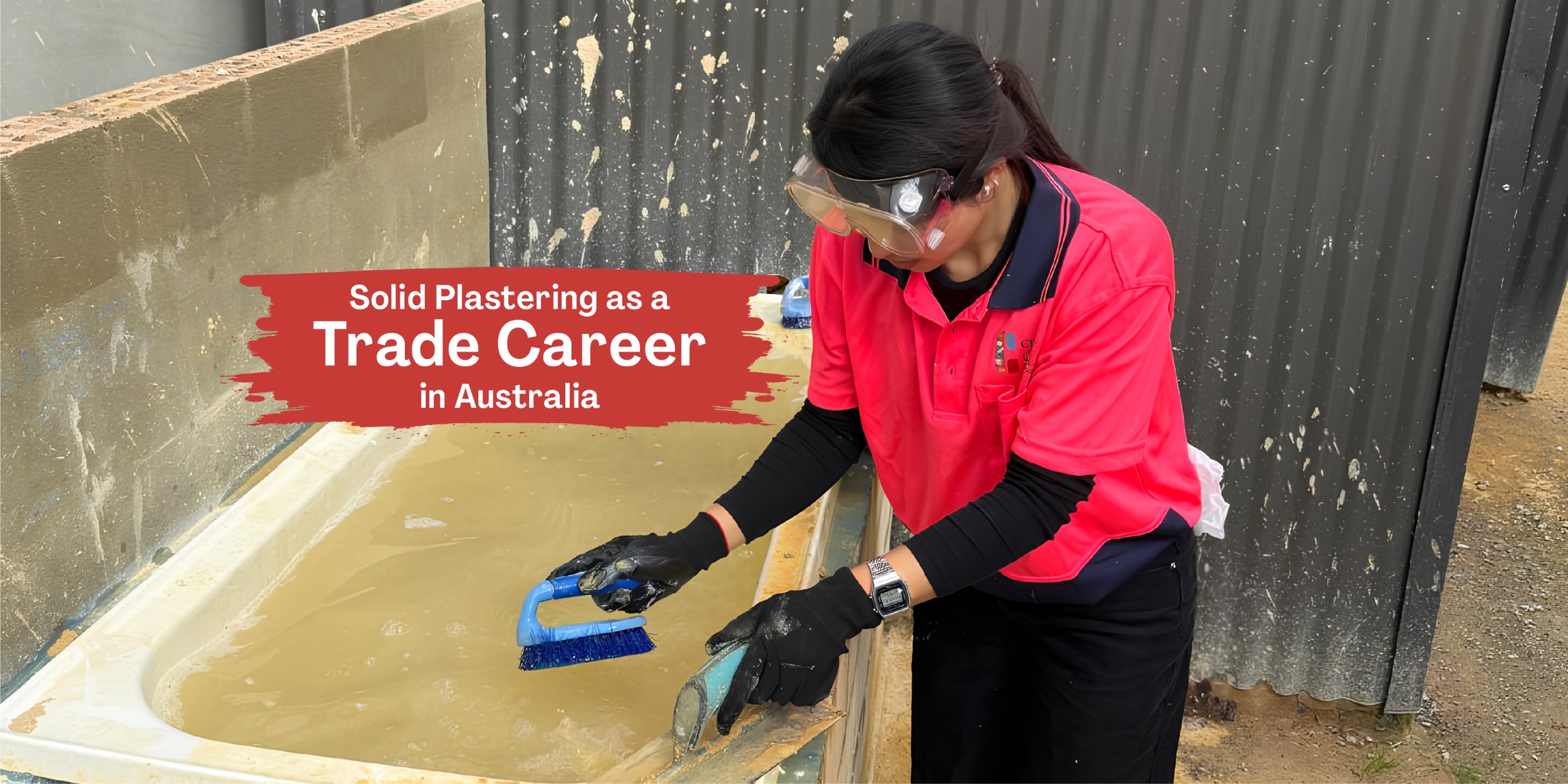
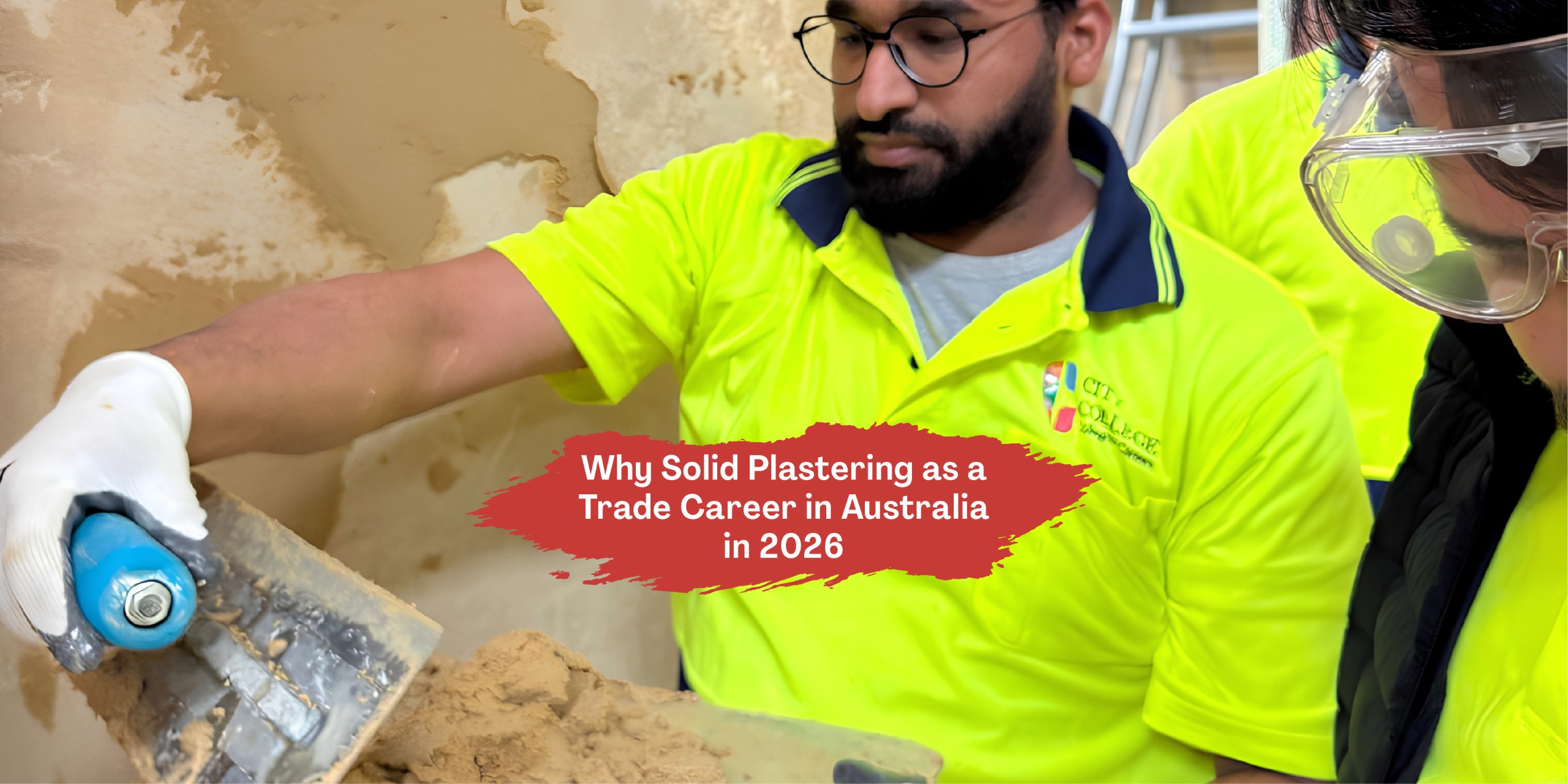
City College Perth delivers the CPC31020 with practical training at its Construction Workshop facilities in Kelmscott. The hands-on component means students are working with real materials and real tools from early in their training, not completing practical work only in the final stages of the course.
Classes for the CPC31020 at City College Perth are available on Saturdays and Sundays. It giving students the flexibility to manage other study or employment commitments alongside their trade training.
CRICOS registration ensures that providers deliver the qualification according to Australia’s national standards for international students and meet the required quality assurance and student support obligations.
📎 Source: TEQSA — CRICOS Register, cricos.teqsa.gov.au
What to Look for in a Solid Plastering Training Provider
Trade qualifications vary significantly in quality depending on where they are delivered. When evaluating a training provider for the CPC31020, the questions that matter most are:
- Does the practical training happen in a real construction workshop environment with proper materials and equipment not just classroom demonstrations or videos?
- Are the trainers working industry professionals with current plastering experience, or academics without recent site exposure?
- Does the provider have access to the range of substrates and materials the course requires brick, block, fibre cement, wet area systems, and fibrous plasterwork?
- Is the qualification delivered on the CRICOS register for international students, with the compliance and student support obligations that entails?
- What does the timetable actually look like, and will it work around existing commitments?
The answers to these questions give you a more accurate picture of what your training experience will actually be than any marketing material can.
Comparing Solid Plastering to Other Construction Trade Pathways
Students sometimes ask how plastering compares to other trade options. Here is an honest comparison across the dimensions that matter most when choosing a pathway:
- Setup costs: Moderate. A professional plasterer’s toolkit mixing equipment, trowels, floats, screeds, and safety gear. It is a meaningful investment but lower than trades requiring power tools or vehicle fit-outs
- Physical demand: High. Plastering involves sustained physical work mixing and carrying heavy materials, overhead work, kneeling, and extended periods of concentration on large surface areas. Fitness and physical conditioning matters in this trade
- Variety: High. No two substrates behave identically, no two buildings are perfectly level, and no two clients want the same finish. Problem-solving is a constant part of the work
- Demand stability: Strong across the construction cycle. Unlike some trades that are only needed at one phase of a build, plastering occurs at multiple stages from shell to fit-out. Which provides more consistent work availability
- Entry to self-employment: Relatively accessible.Many plasterers begin subcontracting within the first few years after qualifying, which in turn offers income flexibility that full-time employment does not.
Frequently Asked Questions
Q: What is the CPC31020 Certificate III in Solid Plastering?
It is the nationally recognised trade qualification for solid plastering in Australia.
Q: Is solid plastering in demand in Australia right now?
Yes. According to Australia’s Skills Priority List, plastering is an occupation in national shortage. As a result, residential construction, commercial development, and infrastructure projects across Western Australia and other parts of the country continue to drive demand for skilled plasterers.
Q: Do I need any prior construction experience to enrol?
You do not need prior experience to enrol. CPC31020 takes students from beginner level to trade-qualified standard.
>Physical fitness, a practical mindset, and a willingness to engage with hands-on learning are more important than prior experience at the start.
Q: What days are classes available at City College Perth?
For added flexibility, the CPC31020 Certificate III in Solid Plastering is available on Saturdays and Sundays at City College Perth.
Q: What is the difference between solid plastering and other types of plastering?
Solid plastering refers to the application of cement-based render and solid plaster materials to masonry and concrete surfaces, both internally and externally. In contrast, plasterboard installation, also called drywall or partition work, is a separate trade under a different qualification.
Q: What is silica dust, and why is it covered in the course?
Cutting, mixing, or sanding cement-based products and certain building materials produces silica dust. Prolonged exposure to silica dust causes silicosis, a serious and irreversible lung disease. The CPC31020 includes WHS training covering silica dust management including wet cutting techniques, respiratory protection, and site monitoring. Because this is a legal and health obligation for anyone working with these materials.
📎 Source: SafeWork Australia — Guide to Managing Risks of Silica Dust, safeworkaustralia.gov.au
Q: Can I become self-employed after completing this qualification?
Yes. Many plasterers work as self-employed subcontractors or run their own plastering businesses. Furthermore, after completing the Certificate III and building practical site experience. As a result, the qualification gives you the credentials to price and deliver your own work. Most graduates spend two to three years employed or subcontracting before moving to full self-employment.
Q: Is the qualification valid across all Australian states?
The Australian Qualifications Framework (AQF) recognises CPC31020 as a nationally recognised qualification. All employers across Australian states and territories accept it.
Q: What materials does the course cover?
Training covers cement-based render, traditional solid plaster, and fibrous plasterwork. In addition, it covers the full range of substrates used in Australian construction, including brick, block, concrete, and fibre cement.
Q: How is plastering different from rendering?
Rendering refers specifically to the application of cement-based material to external masonry surfaces. Plastering covers a broader range of applications including internal surfaces and fibrous work. In practice, qualified solid plasterers do both the CPC31020 covers the full scope. Some clients and contractors use the terms interchangeably in everyday conversation.
To find out more about enrolling, visit citycollege.edu.au or reach the admissions team at admissions@citycollege.edu.au · marketing@citycollege.edu.au
RTO 91770 · CRICOS 04234E